Trolly: Quick-Commerce 3-App Ecosystem
Three synchronised React Native apps (Customer, Vendor and Delivery) for hyperlocal quick commerce, built around a real-time order state machine and a shared networking core.
- Platform
- Mobile app
- Built with
- React Native
- Tech stack
- 8 technologies
Project highlights
- Three synchronised apps: Customer, Vendor and Delivery
- Real-time order lifecycle over WebSockets, no polling
- Persistent audio order alerts for merchants
- Battery-aware background location tracking for riders
Overview
Trolly is a quick-commerce platform designed for 10 to 15 minute delivery cycles. It is made up of three mobile apps, one each for customers, vendors and delivery riders, all kept in sync through an event-driven order lifecycle and a shared API layer. Built with React Native CLI and TypeScript.
The problem
Fast delivery depends on three parties acting in step: the customer ordering, the store accepting and packing, and a rider picking up and delivering. A missed order alert, a stale order status or a rider whose location stops updating directly slows the whole chain.
The solution
A shared typed Axios client handles token rotation, uniform error formatting and request cancellation for all three apps. Redux Toolkit with normalised slices keeps the UI stable during rapid item updates, and WebSocket channels push order changes (PLACED, ACCEPTED, PACKED, PICKED_UP, DELIVERED) straight into each app's store.
Customer app
dynamic catalogue, an optimistic cart that updates instantly and validates stock in the background, cached images for smooth scrolling through large catalogues, and a live order tracker covering store preparation, rider assignment and delivery progress.
Vendor app
persistent order alerts using native Android notification channels with looping custom audio through Notifee, plus a single-screen pipeline for accepting orders, SLA countdown timers and item-level out-of-stock toggles.
Delivery app
an Android foreground service that keeps publishing location while the app is backgrounded or the screen is locked, with address guidance, order confirmation and digital proof of delivery.
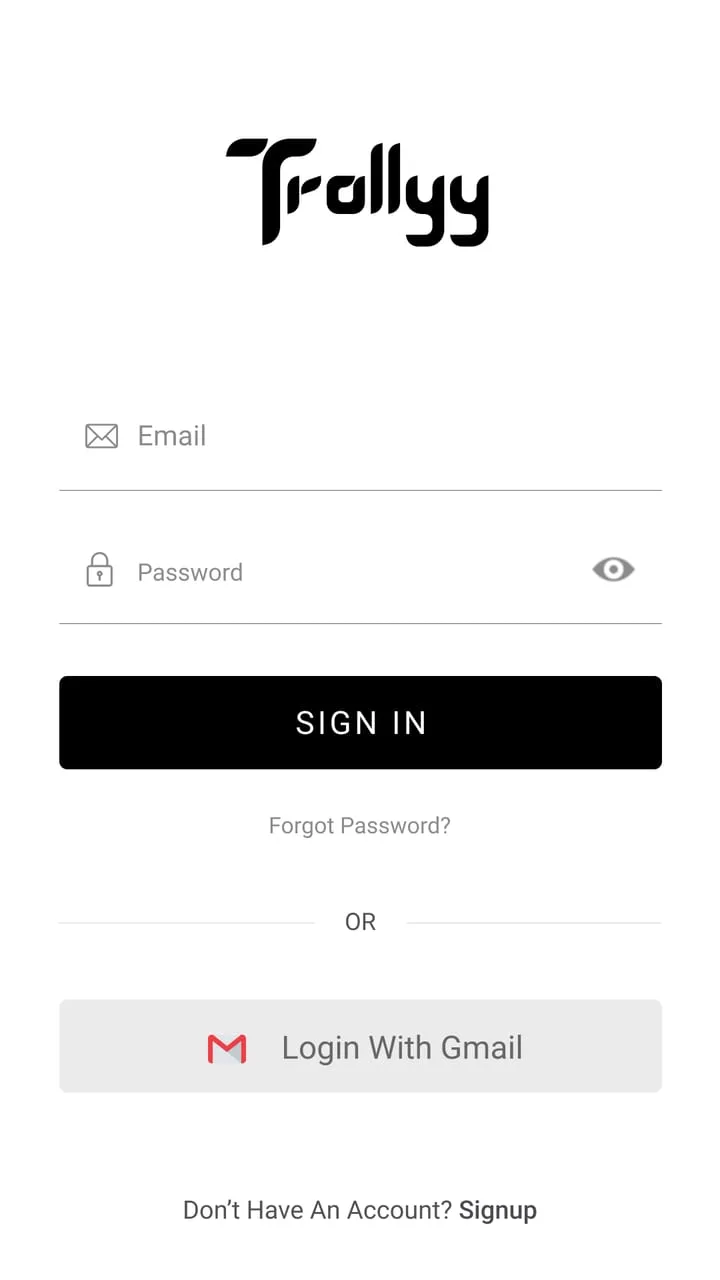
Separate sign-in for each app
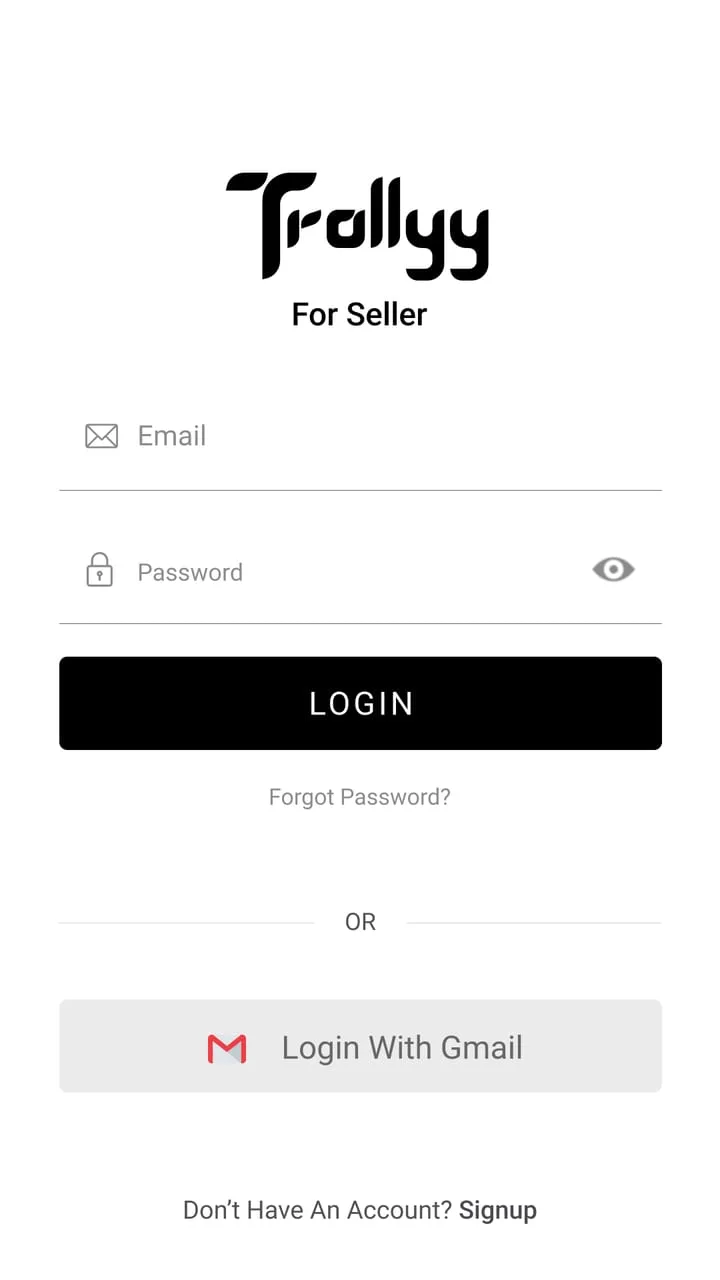
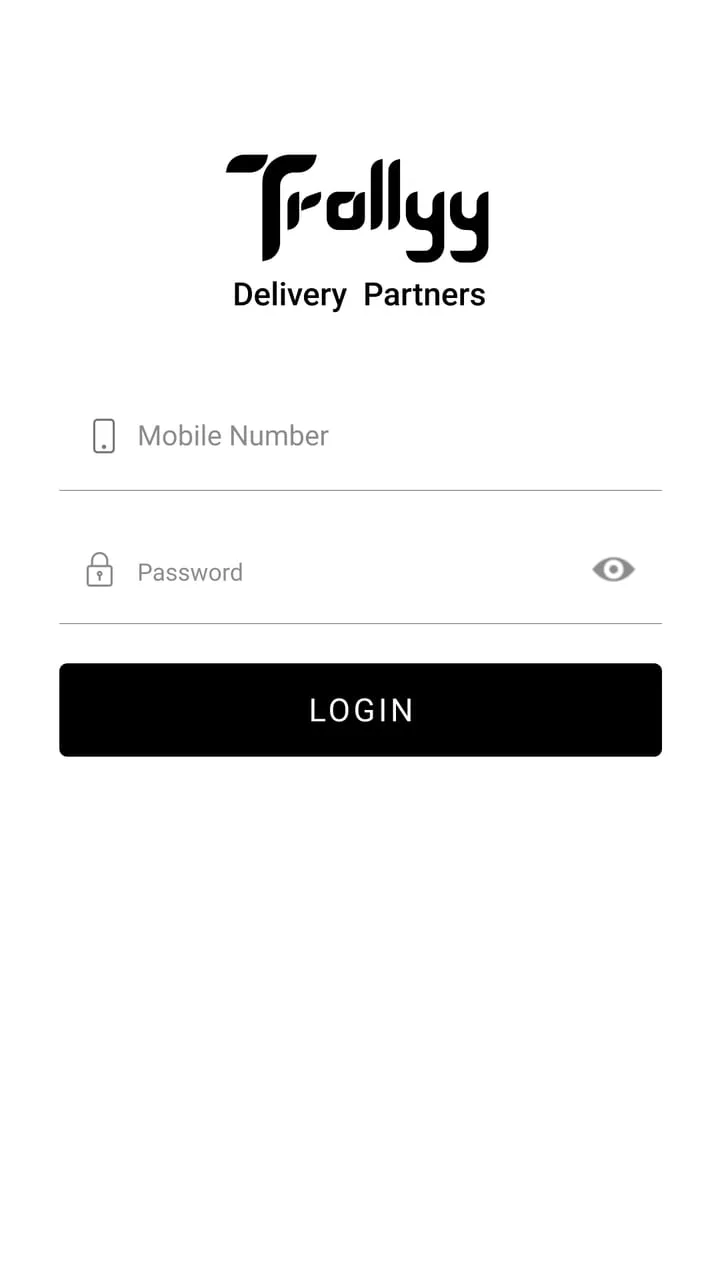
customers use email or Gmail, sellers use email or Gmail, and delivery partners use a mobile number and password.
Customer home
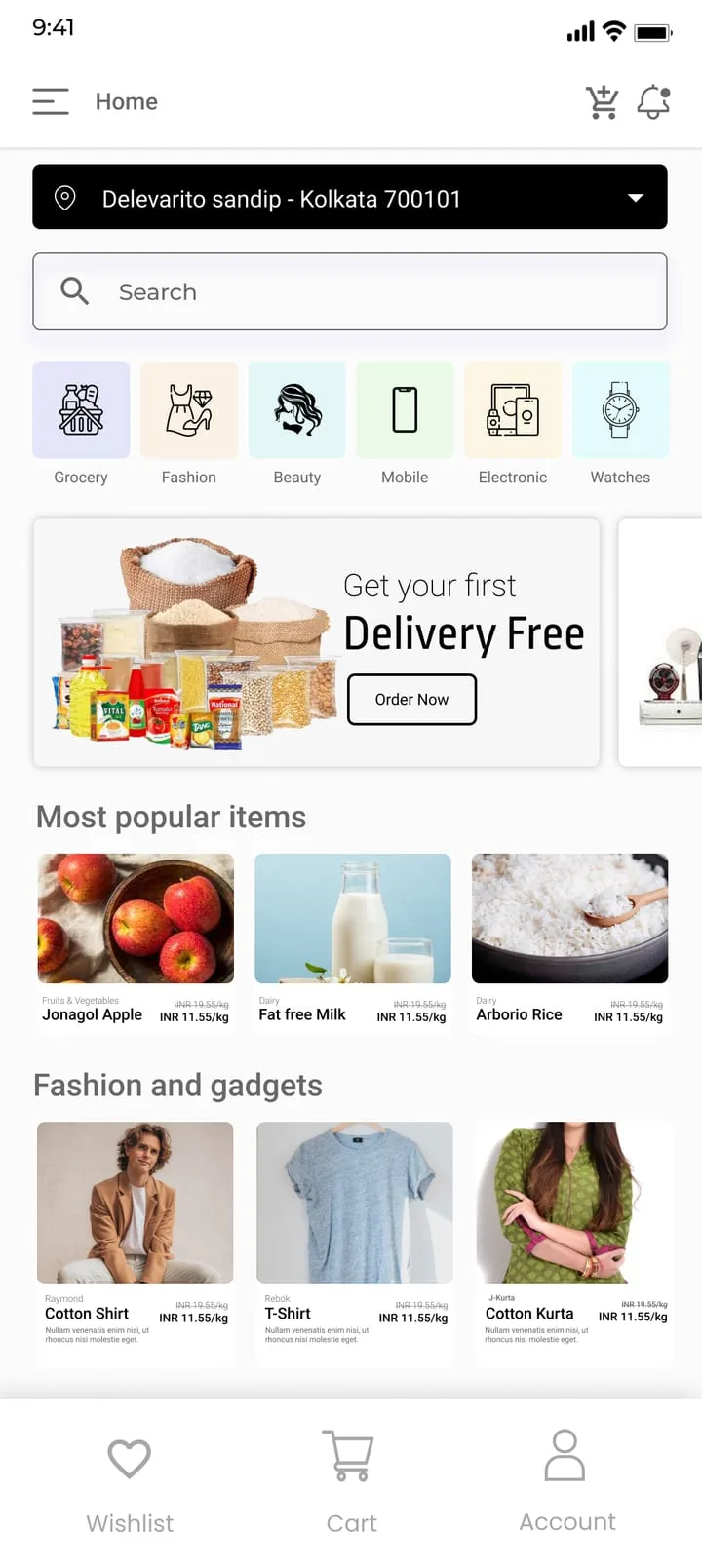
a delivery address bar, search, category shortcuts such as grocery, fashion, beauty, mobile, electronics and watches, promo banners and popular items.
Order tracking
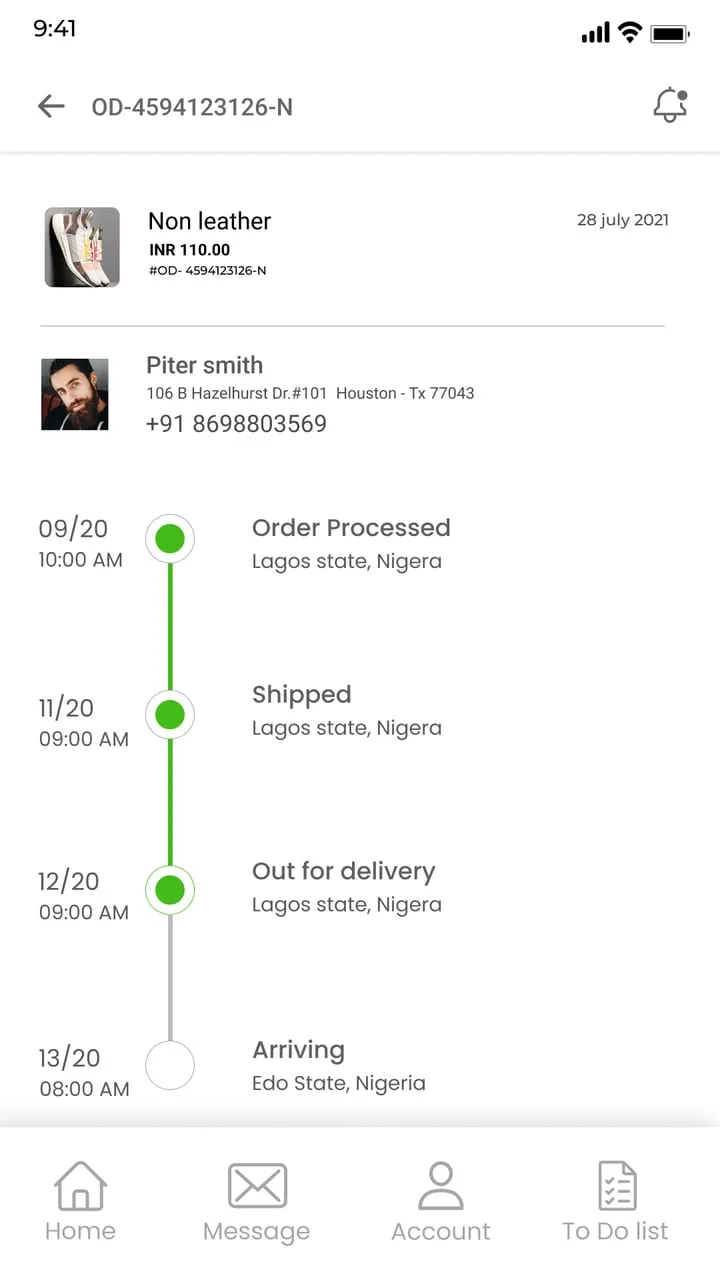
an order summary with customer details and a step-by-step timeline from processed to shipped, out for delivery and arriving.
Architecture
- All three apps talk to central REST and WebSocket services. Shared types and API services are extracted into reusable packages so payload shapes stay consistent across the three codebases.
- Real-time WebSocket events replace polling for order status, which avoids battery-heavy polling loops. React Native CLI (rather than Expo managed) was used for full access to native modules such as foreground services and notification channels.
Challenges solved
- 1
Three independent clients
shared types and networking code were modularised into reusable packages to cut duplicated logic and keep payloads consistent.
- 2
Merchants missing orders
standard push notifications are easy to miss, so incoming orders use high-priority, persistent alerts that keep ringing until the merchant acknowledges the order.
- 3
Rider battery life
location updates are throttled with distance filters and adaptive intervals (roughly every 10 to 15 metres or 5 seconds, depending on speed and displacement) instead of continuous raw GPS queries.
Outcomes
A working three-app ecosystem with live order status across customer, vendor and rider, loud order alerts for stores, background rider tracking within Android background-execution rules, and one consistent data contract across all clients.
Technology stack
- React Native CLI
- TypeScript
- Redux Toolkit
- Axios
- WebSockets
- Notifee
- Android Foreground Services
- react-native-fast-image
Screenshots
More React Native work
- MotorPedia Dealer App: B2B Car Dealer & Auction PlatformLive app for used-car dealers and brokers on iOS and Android: vehicle checks, live auctions, inventory, leads and video marketing in one place. Used by 1,000+ dealers daily with 99% uptime.View case study
- MotorPedia Classifieds: Used Car Marketplace (Web, iOS & Android)Live marketplace for buying and selling pre-owned cars on the web (installable PWA), Android and iOS, with search and compare, instant valuation, doorstep inspection booking and EMI tools.View case study
- Abeona: Hotel, Suite & Event Space MarketplaceTwo-sided React Native booking marketplace for rooms, suites, banquet halls and local experiences, with radius-based search, a map location picker and full English/Arabic (RTL) support.View case study
Need something similar?
Tell me about your project and I will suggest a plan.